





Imagine trying to modernize a system that was never designed for continuous change.
That is the situation many governments find themselves in today.
Over the past decade, real progress has been made. Services have been digitized, data capabilities have improved, and new technologies have been introduced. But the environment has changed faster than the systems themselves.
Artificial intelligence is reshaping how work gets done. Risks are becoming more interconnected. Expectations from citizens continue to rise. And many of the processes governments rely on were built for a slower, more predictable world.
This is where the shift becomes clear.
Deloitte’s government trends 2026 shows that the challenge is no longer transformation. It is execution. The question is no longer how to introduce change, but how to make it work in practice, consistently, and at scale.
To understand what this shift looks like in practice, Deloitte highlights 8 trends shaping how governments are evolving. Taken together, they show how operating models, technology, and service delivery are being redesigned. One shift in particular stands out: how regulation is becoming more structured and applied directly in systems.
Top 8 trends shaping government in 2026
Let’s unpack the 8 trends Deloitte highlights, shaping how governments are adapting to new demands and rising expectations:
- Adaptive by design: The next operating model for government
- From enabler to architect: How technology leadership now shapes mission delivery
- Customized for constituents: Agentic AI accelerates personalized public services
- Rewiring regulation: From static rulebooks to adaptive, data-driven oversight
- Cognitive government accelerated: From aspiration to operational reality
- New models of public-private collaboration: Rethinking how governments create public value
- The procurement reset: Adopting a simplicity-first mindset
- Scaling the public sector’s human edge: Making human-AI collaboration work
1. Adaptive by design: The next operating model for government
The first signal of change is how governments are organizing themselves.
Instead of relying on large, multi-year reform programs, there is a move toward operating models that can adapt continuously. Decisions, workflows, and policies are designed to evolve over time rather than remain fixed.
What matters here is how adaptability is built into the system. Governments are simplifying decision rights, embedding safeguards directly into workflows, and using real-time data to adjust how services are delivered.
The implication is clear. Improvement is no longer episodic. It becomes continuous, allowing governments to respond as conditions change rather than after the fact.
2. From enabler to architect: How technology leadership now shapes mission delivery
As systems evolve, so does the role of technology leadership. Technology leaders are no longer just maintaining systems. They are shaping how government delivers on its mission. This includes selecting AI models, defining guardrails, and orchestrating the ecosystems where digital services are delivered.
What stands out is how closely strategy and execution are now connected. Technology leaders are operating at both levels, influencing not only what gets built, but how outcomes are achieved.
This elevates technology from a support function to a core driver of mission delivery.
3. Customized for constituents: Agentic AI accelerates personalized public services
Expectations around service delivery are changing. Citizens increasingly expect services that are easy to navigate and tailored to their needs. With agentic AI, governments can move toward more personalized and proactive interactions.
What makes this different from earlier digital efforts is the ability to adapt in real time. Services can respond to individual circumstances, rather than follow a fixed process.
The result is a shift from standardized service delivery to experiences that feel more relevant, accessible, and aligned with individual needs.
4. Rewiring regulation: From static rulebooks to adaptive, data-driven oversigh
This is where the broader shift becomes most visible.
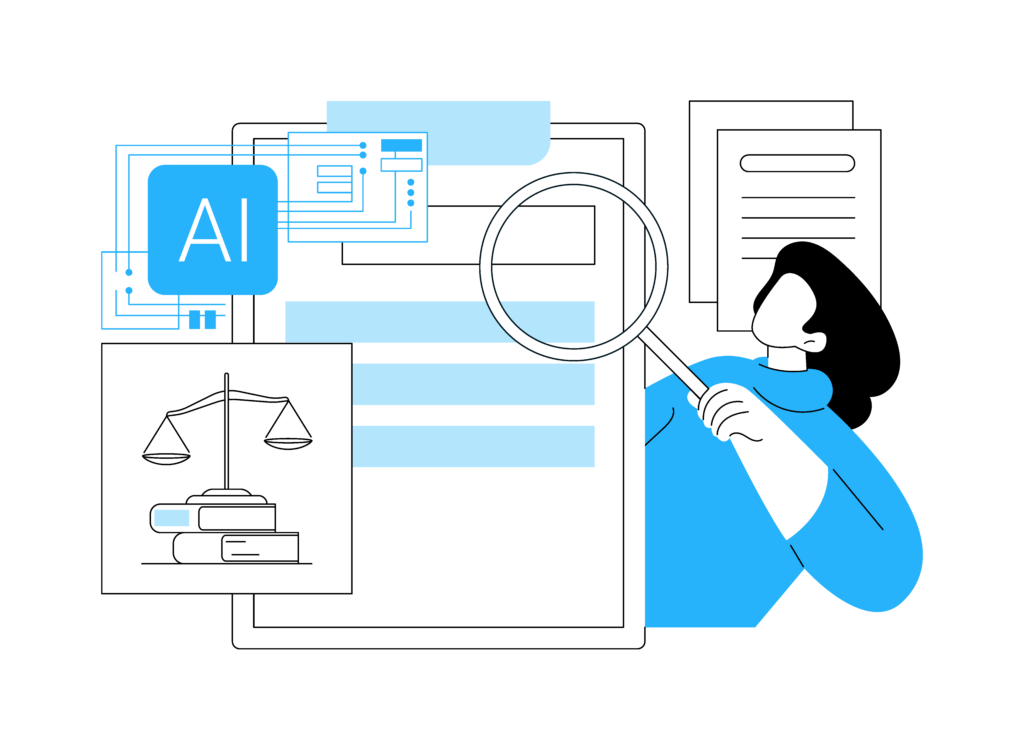
If governments are redesigning how they operate, regulation is one of the most critical areas to address. It defines what is allowed, how decisions are made, and how risk is managed. Yet in many cases, it still exists as static text, separate from the systems where execution actually happens.
The result is friction. Many regulatory processes still rely on manual interpretation, repeated data entry, and fragmented systems. At the same time, regulators are expected to keep pace with rapid innovation while maintaining trust and safety.
What is changing is how regulation is applied. Regulation is increasingly being translated into structured, machine-readable formats that can be embedded directly into workflows.
In practice, this enables:
- Consistent application of rules
- Automated compliance checks
- Real-time oversight
Instead of interpreting rules repeatedly, they can be defined once and applied across systems.
This fundamentally changes how regulation works in practice. Decisions become more consistent and transparent. Processes become faster and less dependent on manual effort. And systems can adapt more easily as new risks and technologies emerge.
This is where we see the biggest shift. There has always been a gap between policy and execution. Regulations are written in text, while execution happens in systems. Bridging that gap requires interpretation, translation, and often significant manual effort.
By structuring rules and making them machine-readable, governments can move from interpretation to execution. In our joint work with Deloitte on RegExplorer Reengineer, we have seen together how this shift can be applied in practice through structured models that are consistent, transparent, and scalable.
This is not just about digitizing regulations. It is about making it operational.
5. Cognitive government accelerated: From aspiration to operational reality
AI is moving beyond experimentation. Governments are embedding AI into core workflows and decision-making processes. What was once explored in pilots is now becoming part of day-to-day operations.
What matters here is not just adoption, but integration. AI is being used alongside human judgment to improve decisions, reduce manual work, and increase speed. This allows governments to move from reactive processes to more proactive and data-informed operations.
The shift is from isolated use cases to AI as part of the operating system, where it continuously supports how work gets done and how decisions are made.
6. New models of public-private collaboration: Rethinking how governments create public value
Governments are no longer delivering outcomes alone.
They are working within broader ecosystems that include private companies, nonprofits, and other partners. The focus is shifting from managing individual contracts to enabling collaboration across these networks.
What stands out is the move from transactional relationships to shared outcomes. Governments are not just procuring services but coordinating capabilities across multiple actors to address increasingly complex challenges.
This expands what governments can deliver and improves their ability to respond more quickly and effectively as needs evolve.
7. The procurement reset: Adopting a simplicity-first mindset
Procurement is another area where execution is being rethought. Instead of digitizing complex processes, governments are simplifying them first. Only then do they apply technology.
This is a critical reversal. Many earlier efforts focused on automating existing processes without improving them, which limited impact.
By simplifying first, governments can reduce friction, improve access for suppliers, and achieve faster outcomes. Technology becomes an enabler of clarity rather than an added layer of complexity.
8. Scaling the public sector’s human edge: Making human-AI collaboration work
As AI becomes more embedded, the role of people becomes even more important.
Governments are focusing on how to combine human judgment with AI capabilities effectively. This includes redesigning roles, building new skills, and supporting continuous learning.
What stands out is the move away from rigid roles toward more flexible, skills-based teams that can adapt as needs change. AI can support decision-making and automate routine work, but human oversight remains critical, especially in areas where accountability, ethics, and context matter.
At Be Informed, this is a principle we strongly believe in. AI should enhance decision-making, not replace it. Keeping humans in the loop ensures that outcomes remain transparent, explainable, and aligned with policy intent.
The goal is not to replace people, but to create systems where humans and AI work together to deliver better outcomes.

Where execution starts to matter
The real difficulty is not defining what needs to change. It is making that change work in practice, across systems, teams, and policies.
Rewiring regulation is one of the clearest examples of this. When rules can be applied directly in systems, a lot of friction disappears. Decisions become more consistent, processes move faster, and it becomes easier to adapt when things change.
At the same time, even as AI becomes more embedded, people stay at the center. Judgment, context, and accountability still matter, especially in public sector environments.
What is changing is how everything comes together. From policy that needs interpretation to rules that can be applied directly. From fragmented systems to more connected ways of working. From manual processes to systems that support execution day to day.
That is where real progress is happening.